Empowering Learning Through Custom Ed Tech Solutions
Where your educational goals meet our software solutions.
Content Types
Dynamic Course Creation via Diverse Content Formats
An e-learning platform should support a diverse range of content formats to create engaging and dynamic courses.
- Video: Live tutorials, recorded webinars, screencasts, and interactive videos with embedded quizzes.
- Audio: Podcasts and narrated presentations for auditory learners.
- Text-based: Articles, eBooks, slide presentations, and downloadable PDFs.
- Gamified content: Elements like badges, points, and leaderboards to increase learner motivation and engagement.
- Interactive content: Quizzes, polls, surveys, simulations, and dialogue-based scenarios.
- Immersive content: Virtual Reality (VR) and Augmented Reality (AR) to provide hands-on training for high-risk or complex skills.
- Microlearning: Breaking down complex concepts into small, easy-to-digest chunks of content.

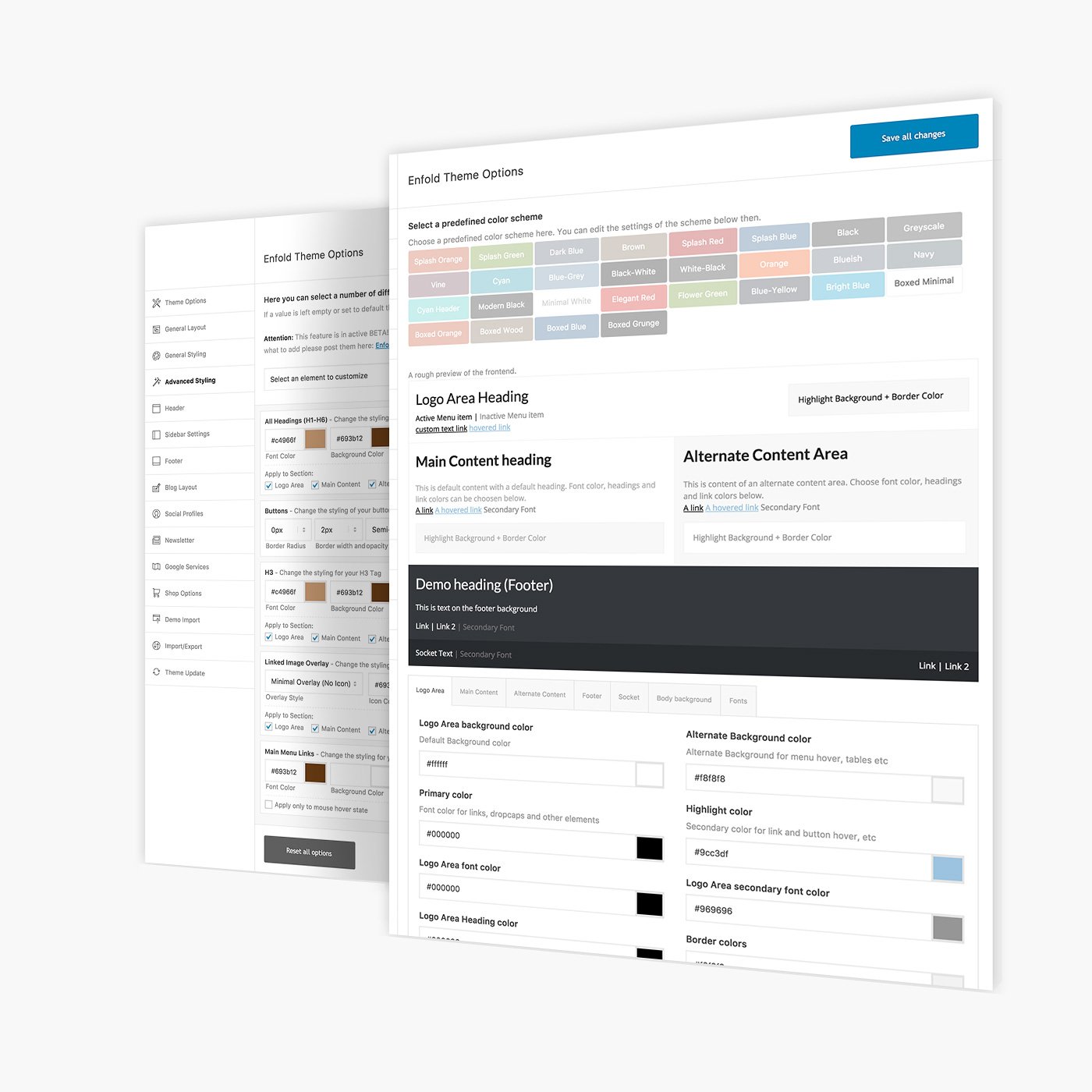
Select from multiple predefined color schemes…
Build your own color schemes
Edit the styling of single elements with the advanced styling editor
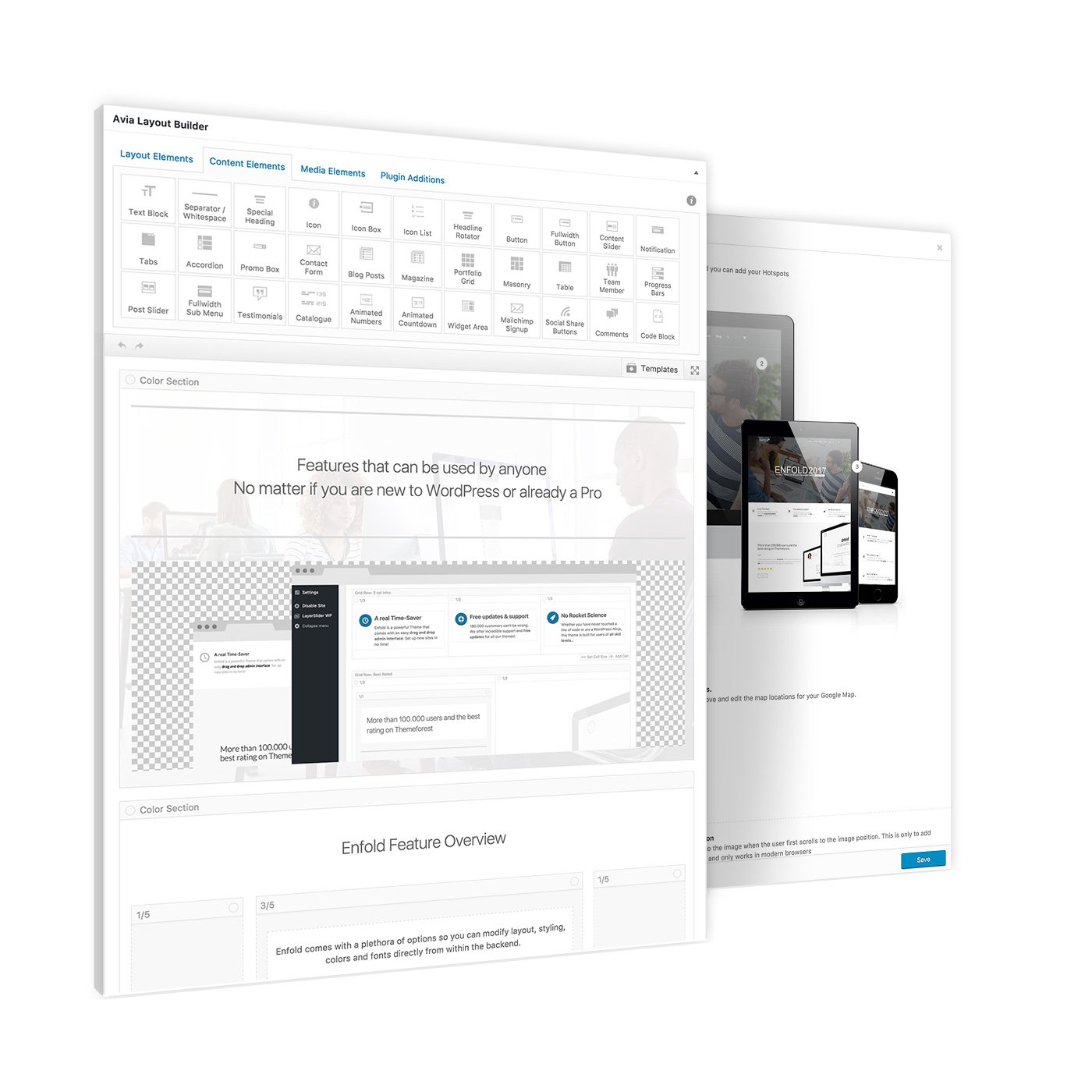
Tons of elements to build your site
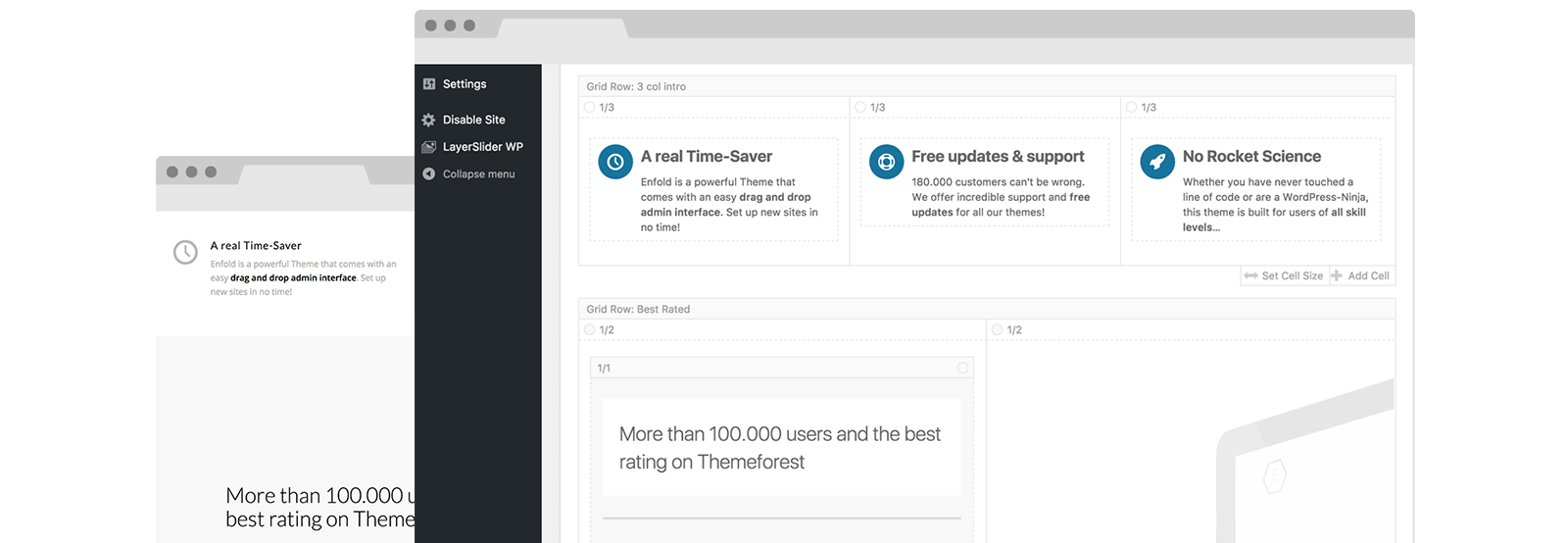
Canvas preview to build your layout
Learning Modalities
Different modes of delivery to suit various learning preferences and schedules.
- Asynchronous learning: Self-paced learning where users access content at their convenience, with materials available 24/7.
- Synchronous learning: Live online sessions, such as virtual classrooms and webinars, where instructors and learners interact in real-time.
- Blended learning: A mix of both synchronous and asynchronous learning methods to provide a more comprehensive experience.
- Mobile learning (mLearning): Content is delivered through mobile devices, ensuring it is accessible anytime and anywhere, with features like offline mode for uninterrupted learning.
Authoring and Management Tools
Robust tools for creating, organizing, and updating courses
- Authoring tool: Allows for designing and assembling educational content with built-in templates and a drag-and-drop interface, making it accessible even to non-coders.
- Content management: Provides a centralized database, or content library, to organize and reuse learning materials across different courses.
- Course builder: Features for creating and structuring courses by combining different content modules.
- Assessment authoring: Tools for building quizzes, assignments, and exams that align with learning objectives.

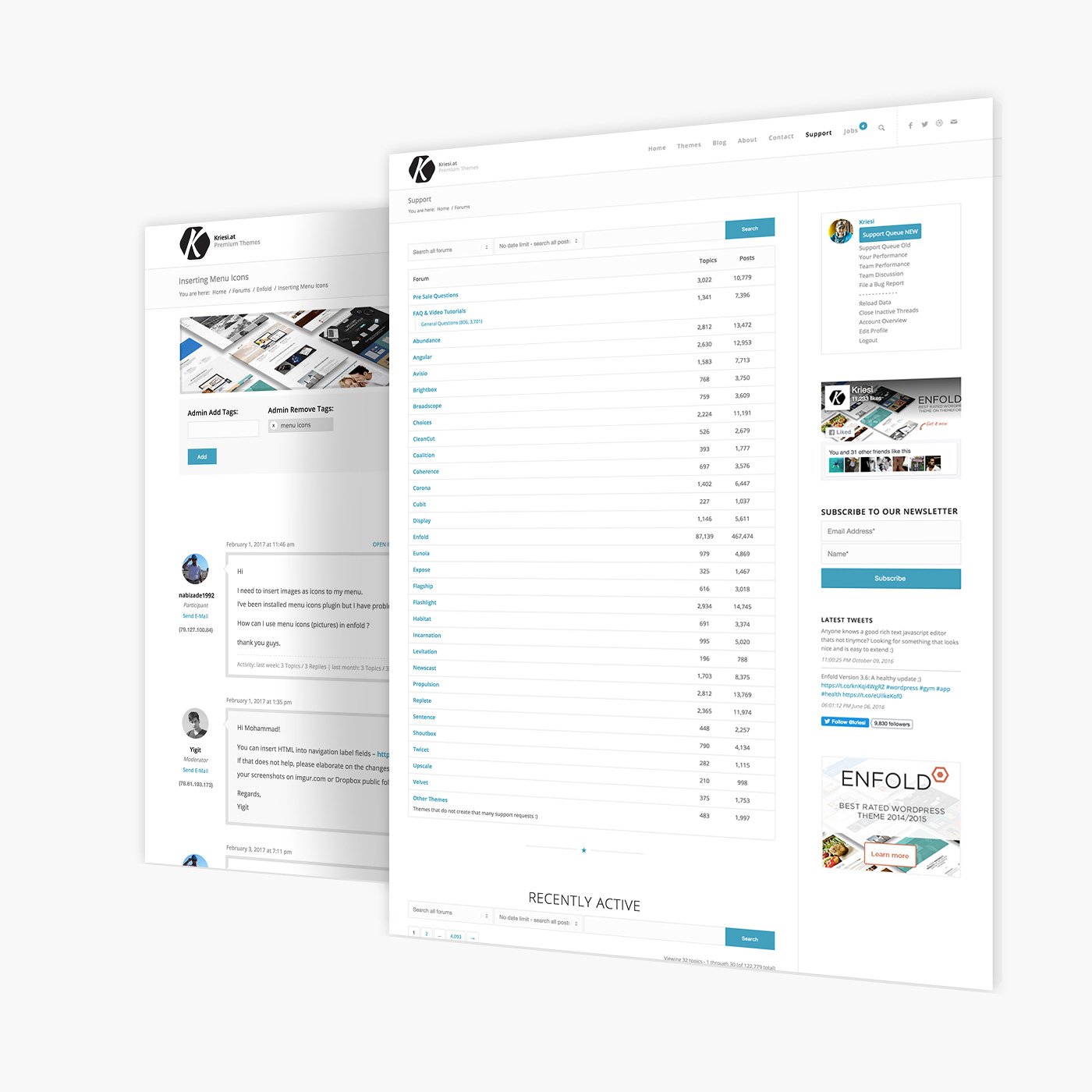
More than 120.000 Threads answered show that we do care!
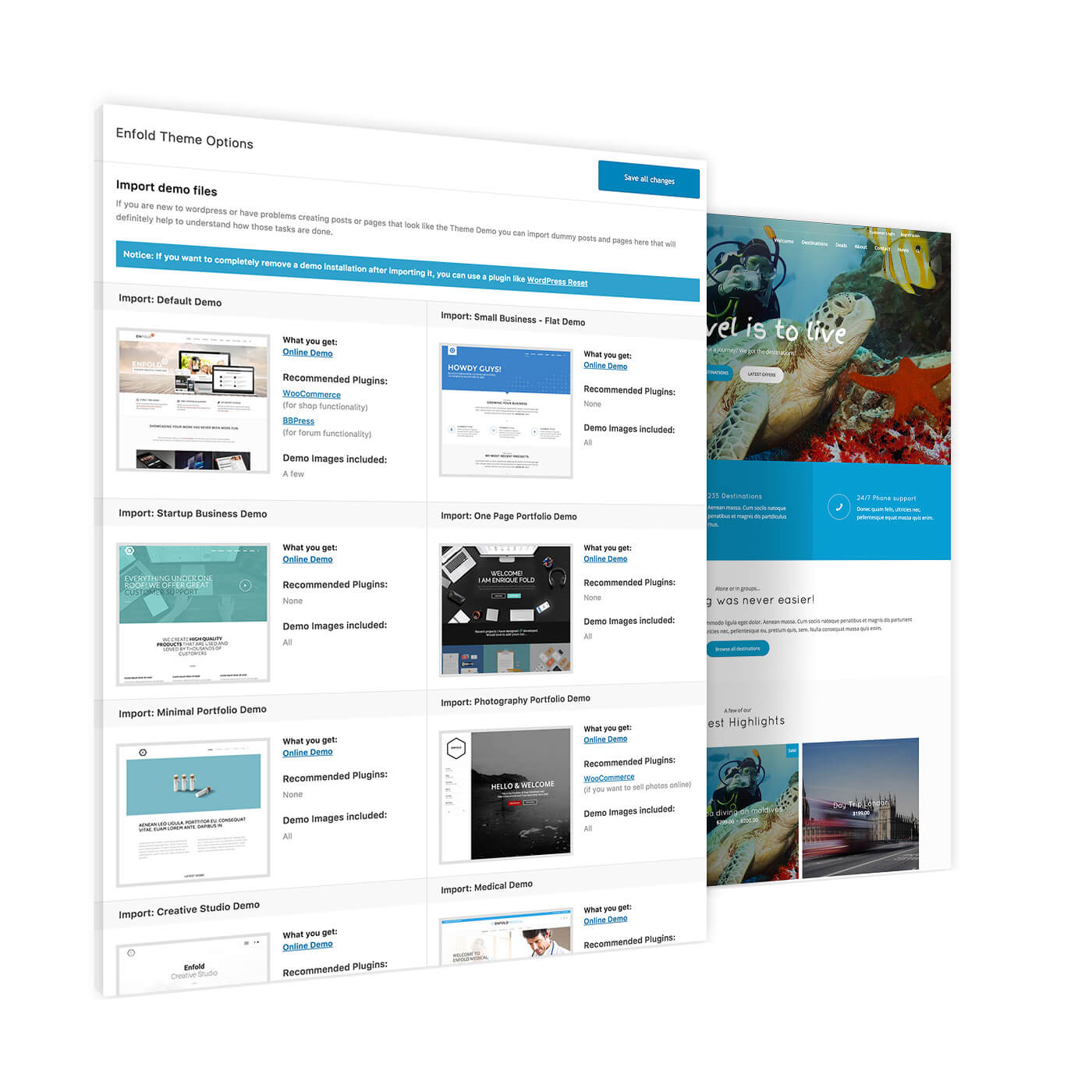
Click on one of the demo import buttons…
…and set up a whole site in less than a minute
Learner Experience
Features that personalize and enhance the learning journey
- Personalized learning paths: Tailored training journeys based on an individual’s role, performance, or preferences.
- AI-powered recommendations: Artificial intelligence that suggests relevant courses based on a learner’s behavior.
- Gamification elements: Features like leaderboards and achievement badges to motivate learners.
- Social and collaborative tools: Discussion forums, chats, and social media integrations to foster communication and peer learning.
- Multilingual support: Features for automated translation and localized content to serve a global audience.
- User-friendly interface (UI): A clean and intuitive design for seamless navigation.
Tracking and Administration
For organizations, Essential powerful back-end and reporting features for managing and analyzing e-learning programs
- Progress tracking: Dashboards that monitor a learner’s course completion rates, quiz results, and performance.
- Reporting and analytics: Advanced insights into learner engagement, content effectiveness, and overall training outcomes.
- Assessment management: Automated scoring and real-time feedback mechanisms for quizzes and exams.
- Certificates and accreditation: Automatic generation of certificates and badges upon course completion.
- Integration capabilities: Ability to connect with other business software, such as HR systems, CRMs, and video conferencing tools.
- Secure authentication: Features like role-based access control and Single Sign-On (SSO) to protect user data and content.

More than 120.000 Threads answered show that we do care!